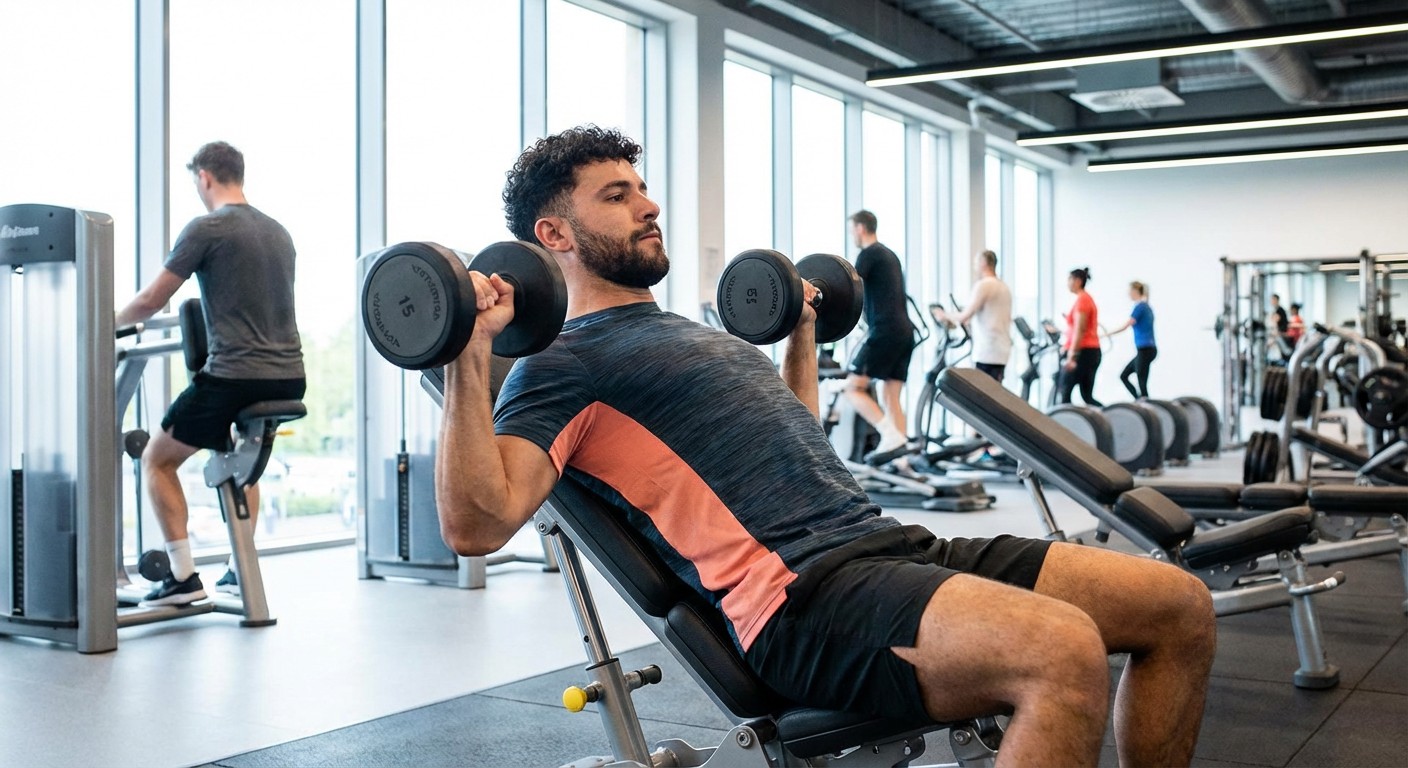
Practical exercises that improve your ability to perform everyday activities with ease.
Functional strength training has one purpose: to make your real life easier and more capable. Unlike traditional bodybuilding that isolates muscles for aesthetics, functional training builds strength in movement patterns you use every day, carrying shopping, climbing stairs, picking things up from the floor, or playing with your kids.
The 7 Fundamental Movement Patterns
Every movement the human body performs can be categorised into 7 fundamental patterns. Train all of these, and you'll be functionally strong for life.
- Squat: The foundation of lower body function, sitting, standing, getting in and out of chairs
- Hinge: Hip-dominant movement, picking things up from the floor, deadlifts
- Push (horizontal): Pushing objects away from you, pressing, bench movements
- Push (vertical): Overhead pressing, reaching high shelves, lifting above head
- Pull (horizontal): Rowing movements, pulling doors, strengthening the back
- Pull (vertical): Pulling yourself up, lat pulldowns, chin-ups
- Carry: Loaded walking, carrying shopping, luggage, children
Research shows that grip strength alone is a remarkably accurate predictor of overall health, longevity, and cardiovascular health. It's one of the simplest measures of functional fitness, and it's trainable at any age.
A Starter Functional Strength Programme
You don't need a fully equipped gym to build functional strength. This programme can be done 3 times per week with minimal equipment.
- Goblet squats: 3 sets of 12
- Romanian deadlifts: 3 sets of 10
- Push-ups (or dumbbell press): 3 sets of 10-15
- Bent-over row: 3 sets of 12
- Farmer carries: 3 sets of 30m
- Overhead press: 3 sets of 10
Tip: Progress slowly and prioritise form over load. Functional strength training done with good technique will transform how your body moves and feels within 8-12 weeks.
Functional Strength at Any Age
One of the most important findings in exercise science is that functional strength training is beneficial at every stage of life, and especially critical as we age. Muscle mass and strength decline at roughly 1-2% per year from our 30s onwards if we don't actively train. Functional strength training is the single most effective intervention to counter this decline and maintain independence and quality of life well into older age.
Share this article